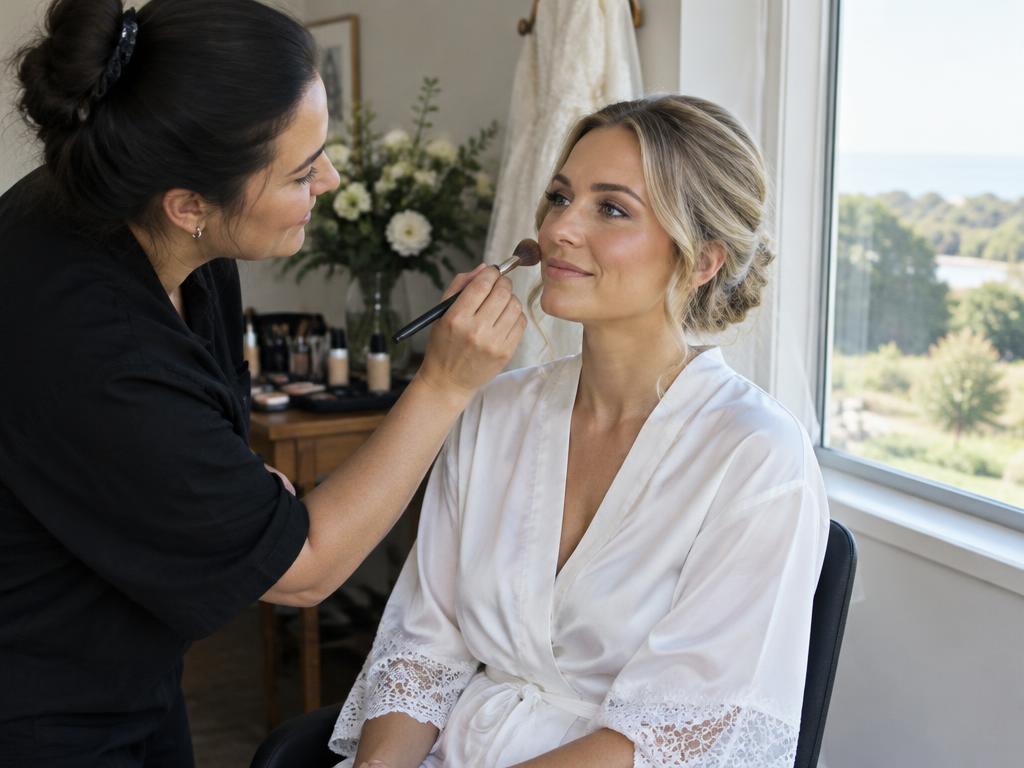
A wedding hair and makeup trial is a working appointment, not a test of whether you can look like a reference photograph. It helps you and your artist translate preferences into something comfortable, wearable and achievable. Arrive with useful context, leave with clear notes, and judge the result over time rather than only in the salon mirror.
TLDR
Bring edited references, disclose sensitivities, test comfort and wear, and record agreed changes. Confirm who will recreate the look and how the wedding morning will run before finalising your booking.
Build a useful reference set
Choose a few reference images and explain the specific feature you like: soft texture, visible freckles, a defined lip or hair away from your face. Include something you dislike. Filtered photographs and different hair density can distort expectations, so ask your artist what translates realistically to your features and hair.
Share your outfit neckline, accessories, ceremony setting and usual routine with shortlisted wedding hair and makeup artists. For small wedding celebrations, the brief may be understated without being effortless. Explain whether you want to feel almost barefaced, polished or dramatically different rather than assuming those words mean the same thing to everyone.
Prepare without surprise experiments
Ask for the artist’s own preparation instructions, including hair washing, existing products and whether to arrive without makeup. Tell them about known allergies, sensitivities, extensions and relevant previous reactions. A trial can reveal comfort issues, but it cannot guarantee that a reaction will never occur.
Bring the actual hairpiece or veil if available, plus any lip product you particularly want considered. Wear a top in a similar colour to your outfit if helpful. Avoid introducing unfamiliar treatments simply because the appointment feels important; discuss preparation questions with the relevant qualified professional instead.
Test life beyond the chair
Look at your makeup in daylight and indoor light, and take unfiltered photographs from ordinary conversational distances. Check the neckline transition, how lashes feel when blinking and whether your preferred expressions still look like you. Ask before changing anything so the artist can understand what needs adjusting.
For hair, turn your head, sit back and try the veil placement. Note pulling, loose pins or accessories that catch. After the appointment, observe how both hair and makeup wear during normal activity. Record what changed and when, distinguishing a personal preference from a comfort or durability problem.
Compare outcomes not photographs
Imagine one trial produces beautiful waves that feel distracting around your face, while another produces a softer updo you barely notice. The second may suit a windy ceremony better even if the first photograph looks more striking. Compare comfort, suitability and communication alongside the finished appearance.
Wedshed’s makeup trial interview describes the appointment as a chance to collaborate and test products. Treat that as practical context, not a promise of perfect results. Give specific feedback: less shine through the centre, a lighter lash or more secure placement is more actionable than saying something feels wrong.
Keep a short wear diary rather than relying on memory. Note when you noticed shine, fading, slipping accessories or discomfort, and photograph the relevant detail without smoothing filters. Share the observations kindly and ask which adjustments are realistic. If you wear glasses, bring them and check how they sit with lashes and hair around your temples. If you plan to remove a veil after the ceremony, practise that transition and identify who can help without disturbing the style. These ordinary movements often provide better feedback than another posed photograph taken immediately after the appointment. Comfort deserves space in your final decision too.
Document the wedding morning plan
Ask the artist to record products, shades, hair preparation and agreed changes, and clarify whether another trial would help resolve substantial adjustments. Confirm whether the trial artist is the person booked for the wedding. If assistants are involved, ask who does which services and how preferences are shared.
Connect your beauty schedule with the wedding planning guide, allowing room for dressing, photographs and movement between locations. Before you share your beauty brief, confirm service numbers, location access, travel arrangements, touchup options and cancellation terms. Keep your final reference images and notes together so the wedding appointment begins with an agreed plan, not fresh guesswork.
Explore the complete guides