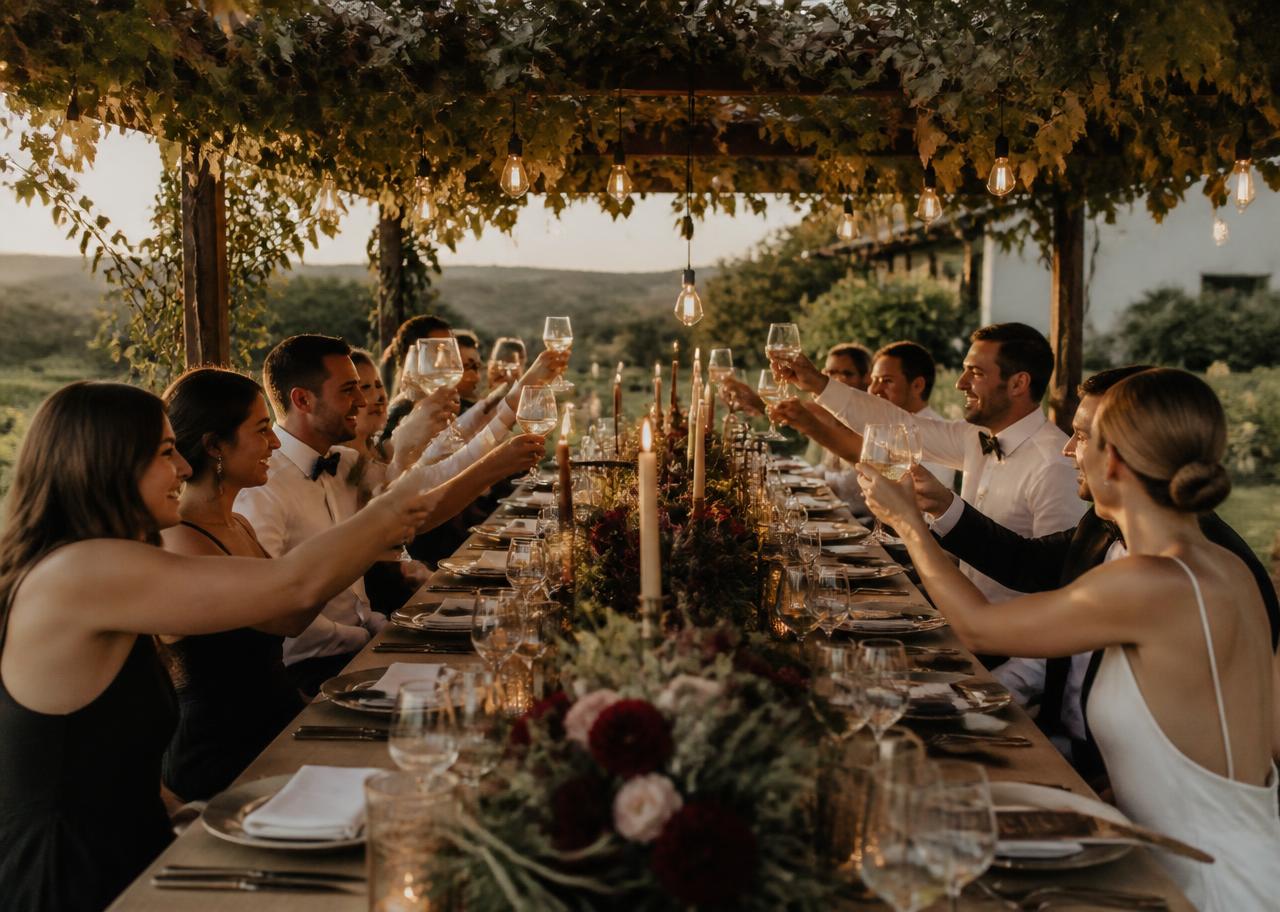
The way you serve food changes the rhythm of a wedding. A plated meal creates natural pauses, shared dishes invite conversation and cocktail service keeps people moving. None is automatically more relaxed or more affordable. The best choice suits your guests, venue and appetite for structure, with enough practical planning that everyone can actually enjoy eating.
TLDR
Choose a meal format around guest comfort and venue capability, then check staffing, dietary management and the full scope of service. Ask how everyone will receive enough suitable food, not simply what appears on the menu.
Start with people and practicalities
Before approaching wedding caterers, outline your guest count, venue, timings and preferred atmosphere. Include children, older guests and anyone who may find standing or carrying plates difficult. Think about the full period guests will be with you, including travel, ceremony and photographs before the main meal.
Check what the venue provides: preparation space, refrigeration, power, water, washing facilities and waste arrangements. An external caterer may need equipment or a temporary kitchen. Use your venue checklist to settle responsibilities early. A menu cannot be assessed properly without understanding where and how it will be prepared and served.
Plated meals offer a clear rhythm
Plated service gives each guest an individual meal and creates defined moments for speeches or other formalities. It suits couples who want everyone seated together for a substantial part of the reception. Ask how menu choices are collected, how tables are served and how dietary meals reach the correct people.
Consider the pace rather than assuming plated service is slow or formal. Course numbers, kitchen capacity and staffing all matter. Ask where speeches fit without leaving food waiting. If guests select meals beforehand, establish the deadline and how late changes, seat swaps or missing place cards will be handled.
Cocktail service still needs structure
A cocktail reception works best when movement is a preference, not an obligation. Provide meaningful seating and accessible places to eat, including for guests who cannot stand comfortably. Ask how substantial items are served and how staff reach people outside the busiest clusters, rather than relying on guests chasing trays.
Request a service schedule explaining the progression from lighter bites to more substantial food. Discuss how dietary options are identified and delivered, and whether a dedicated station would help. Avoid equating the number of menu items with a complete meal: serving size, timing and distribution all affect the experience.
Confirm safety, service and scope
The NSW Food Authority’s catering guidance is a useful starting point for food safety questions in NSW; requirements elsewhere should be checked locally. Ask your caterer how they manage temperature control, transport, allergens and cross contact. Share dietary information accurately and avoid promising guests that any kitchen is completely risk free.
Compare quotes for staffing, equipment, tableware, drinks service, setup, pack down and waste removal as well as food. Ask who handles leftovers and what can safely be retained. Record service decisions in your planning guide. When you make an enquiry, explain your priorities and venue limitations so proposals address the same practical brief.
Ask about a tasting and what it can meaningfully demonstrate. A small tasting may help you assess flavours and presentation, but it cannot reproduce service for an entire wedding. Discuss how dishes hold, travel and reach tables under event conditions. If cultural or family food traditions matter, describe them early and ask where the caterer has relevant experience. Clear descriptions are kinder than expecting a supplier to infer the importance of a particular dish from its name alone. Confirm these decisions before finalising your menu.
Explore the complete guides