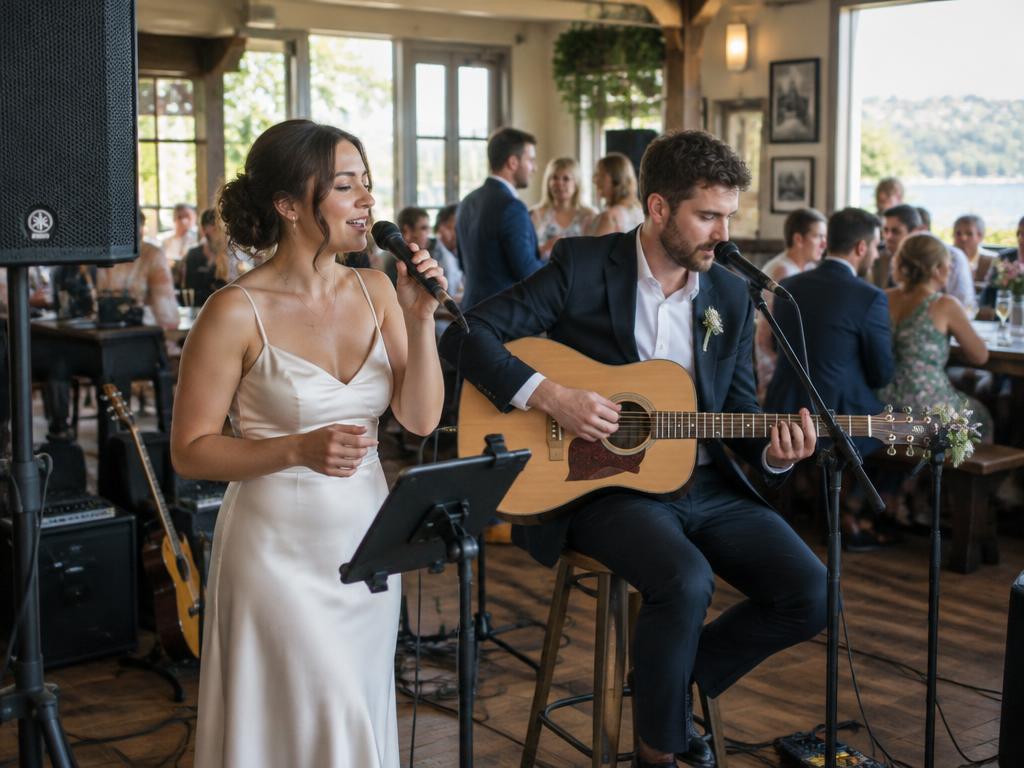
Choosing reception music starts with imagining the room, not declaring loyalty to live instruments or a mixing desk. A great fit supports conversation, handles formal moments and creates the kind of dancing you actually enjoy. Compare the performance, equipment and logistics as one service, then decide which format suits your venue and the people celebrating with you.
TLDR
Compare repertoire, performance style, breaks, equipment and venue fit. Ask who handles announcements and transitions, and confirm sound requirements directly with the venue and relevant local authority where needed.
Describe the atmosphere first
Write a short musical brief for arrival, dinner and dancing. Name favourite artists, songs you dislike and any cultural or family moments that deserve particular care. Explain whether you picture exuberant singalongs, relaxed background music or a tightly mixed dance floor rather than relying on a genre label alone.
Use that brief when exploring wedding DJs and bands. Request examples that show transitions and audience interaction, not only a polished chorus. A musician’s tone and a DJ’s mixing style matter, but so does their ability to understand the atmosphere you want without making themselves the main event.
Compare flexibility and personality
A DJ can work with recorded tracks, while a band brings its own arrangement and live performance character. Neither format guarantees a particular mood or an engaged dance floor. Ask a band for its actual repertoire and a DJ how requests are handled, including songs outside your preferred styles.
For example, a couple wanting the original recordings of several distinctive tracks might prefer a DJ. Another couple might value familiar songs reinterpreted by musicians. If considering a hybrid, ask how performers share sound equipment and hand over between sets so the combination feels intentional rather than disconnected.
Map the room and equipment
For pub wedding celebrations, establish whether your booking covers a private room, shared areas or an outdoor space. Ask the venue about performance positions, loading access, available power, equipment restrictions and sound expectations. Check any applicable requirements with the venue or relevant local authority; do not assume universal noise rules.
Send entertainers a floor plan and ask what space they need for equipment, performers and safe movement. Confirm who supplies speakers, microphones, lighting and any required technical support. If speeches happen elsewhere, ask whether moving equipment interrupts music or requires a separate setup. Put the agreed arrangement in writing.
Plan the gaps and cues
Ask a band how sets and breaks work and what guests hear between them. Ask a DJ about coverage during meals and formalities. In either case, establish who makes announcements, checks name pronunciations and cues entrances, speeches and the first dance. An entertainer is not automatically your reception coordinator.
Build a cue sheet with the exact song version, starting point and person authorised to signal each moment. Your wedding planning guide can hold this alongside the run sheet. Discuss what happens when dinner runs late, a speaker disappears or your first dance finishes sooner than expected.
Discuss guest requests before the reception. You can welcome suggestions while still protecting a short list of songs you do not want played. Explain whether explicit lyrics are suitable and flag any announcements that need particular discretion. For cultural music, supply accurate titles and versions, then ask how unfamiliar tracks will be prepared and checked. A recorded example can prevent confusion when several arrangements share a name. Finally, decide who can request a change to the running order, so competing instructions from enthusiastic guests do not leave your entertainers guessing whose direction to follow that evening.
Choose a complete service
Compare proposals using the same reception outline. Check arrival, setup, soundcheck, performance coverage, packdown, travel and overtime arrangements. Ask about replacement performers, equipment backups and cancellation terms. If learning a song is requested, confirm feasibility and how the arrangement will be agreed rather than assuming every request can be accommodated.
Before you send your reception music enquiry, separate essentials from preferences. You might require a particular ceremony recording but remain flexible about the final dance set. Choose the team whose communication, sound and operating plan match your celebration. The best comparison tells you how the whole evening works, not simply how many people stand behind the microphones.
Explore the complete guides